Fade to Graphic: The Barber Chair Is Britain's Newest Print Studio
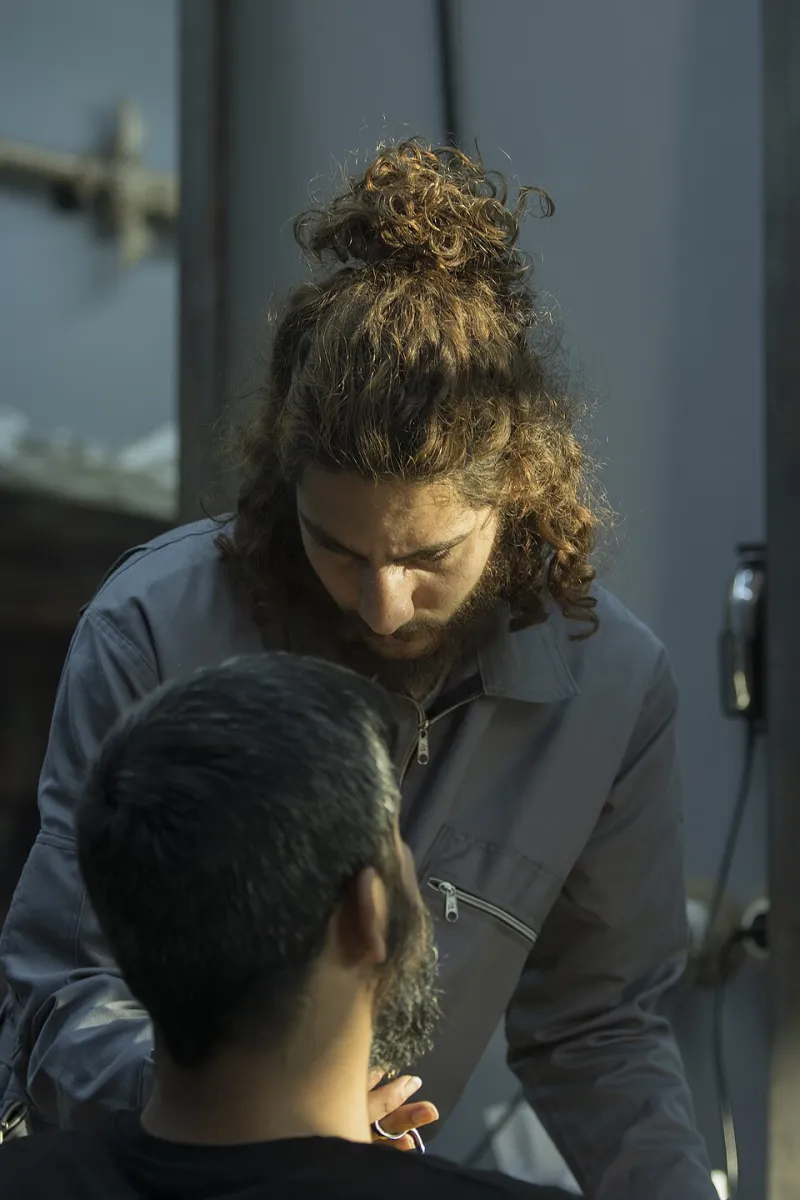
Photo: Mostafameraji, CC0, via Wikimedia Commons
The pavement tells the truth
Walk through any UK city centre on a Saturday and you will see it. A skin fade with a hard line shaved above the ear. A postcode picked out at the nape. A tiny abstract mark behind the temple. Barbershops from Peckham to Glasgow are becoming print studios, and the clipper is the pen.
This is not new, exactly. Footballers have been doing it for years. What has changed is the audience. Shaved-in designs are no longer just a dressing-room flex. They are showing up on students, couriers, musicians, warehouse workers and guys who would never describe themselves as fashionable. That is what makes it interesting. It is street-level self-expression with a two-week shelf life.
Why it works as a trend
Hair grows. That is the whole point. A shaved logo is not a tattoo. It is a temporary mark, a small rebellion that disappears if you let it. That impermanence makes it braver than a lot of so-called bold hair. You can try a symbol, a slogan, a set of abstract lines, and then let the fade swallow it. No laser, no regrets.
It also fits the way British barbering has shifted. The chair is no longer just about a tidy-up. It is a place to collaborate. Clients bring references. Barbers bring line work. The best results feel like a conversation between a head shape and a clipper guard.
Commissioning a clean design
Start with the barber, not the design. Find someone whose portfolio shows healed clipper work, not just fresh lines on the day. Ask how they approach negative space. A good barber will tell you what will blur in a week and what will hold. They will also tell you if your idea is too detailed for the space.
Bring a simple reference. Vector-style line art works better than a photograph with a hundred details. High contrast is your friend: skin against hair. Think about placement. The nape and the side of the head are classic for a reason. They are easy to touch up and easy to cover if you change your mind. A design right on the front hairline is a commitment.
Who it actually suits
The best canvas is a head with a clear difference between hair colour and skin. Dark, dense hair and a sharp fade give the most graphic result. Tight curls and coily hair can carry bold shapes beautifully, but the barber needs to work with the curl pattern rather than against it. Straight hair with a high skin fade is the classic setup. Fine or very light hair can work, but the lines will be softer and the design needs to be simpler.
Length matters too. You need enough hair on top or around the design for the shape to read. A number one all over will not hold a detailed logo. A fade with a defined top gives the clipper room to draw. If you have moles, scars or a scalp condition, point them out before the clipper starts. Good barbers work around them. Bad ones do not ask.
Regrowth and the awkward phase
Here is the truth nobody puts on the barbershop Instagram: shaved-in designs have a short, sharp life. The lines are crisp for maybe seven to ten days. By two weeks they are softening. By three or four they are a ghost. If you want the design to stay sharp, you need a touch-up every fortnight or so. That is the real cost.
The awkward phase is public. There is no hiding a fading slogan on the side of your head. The smart move is to plan the exit before you start. Keep the design small and low. Let the fade grow out rather than trying to shave over it. A good barber can blend the remains into a new shape. If you are growing your hair out completely, expect a few weeks of looking like a faded band poster. That is the deal.
The case for keeping it temporary
Shaved-in logos are not for everyone. They can look brilliant, and they can look like a dare that went too far. The difference is usually planning: a simple design, a barber who understands regrowth, and a client who knows they will be back in the chair sooner rather than later.
But that is also why the trend deserves respect. It is honest. It does not pretend to be permanent. It is a mark you wear for a moment, on a head that keeps moving. In a country full of cautious haircuts, that is worth something.