Local Accents: The 2026 UK Mullet Has Learned to Speak Regional
Walk through Liverpool city centre on a Saturday afternoon and you will see it before you can name it: a sharp, almost architectural fringe at the front, then a deliberate drop at the back. Twenty minutes on a train to Manchester and the proportions change. In Glasgow, the silhouette softens into something shaggier, more lived-in, as if the cut has been rained on and refuses to apologise. The British mullet in 2026 is not one look. It is a set of local accents.
That is the interesting part. The cut that once arrived with a single, loud reputation has become regional. Barbers are not simply copying a reference photo from a social feed; they are translating it for their own streets, their own weather, their own clients. The result is a haircut that behaves less like a uniform and more like a dialect.
The front is the tell
In Liverpool, the mullet has a sharpened edge. The front is often cut with real intent, whether that is a blunt micro-fringe, a heavy side-swept panel or a short, square layer that sits close to the brow. The back is still there, obviously, but it is kept tidier than the old joke version. Think less fancy dress, more football-terrace polish.
A barber working just off Bold Street puts it plainly: 'People here want the cut to look like they meant it. They do not want to look like they have wandered out of a festival. The front has to be strong because that is what you see in every photo.' That is the Merseyside signature: a mullet with a crisp opening line.
It makes sense. Liverpool street style has always been good at taking a bold idea and making it look deliberate. The local mullet is not a messy accident. It is a statement with a clean edge.
Glasgow does not do neat
Head north and the accent shifts. Glasgow's version is heavier through the crown, softer around the face and less interested in a hard front. The shag is doing more of the work here. You will see layered fringes, textured sides and a back that falls in a more natural, almost unbrushed way. It is a cut that looks better after a walk in the rain than it does fresh out of the chair.
A stylist in Shawlands says clients often bring in photos of something much more polished, then ask for it to be 'made less precious'. 'The Glasgow mullet is not really about the sharp line,' she says. 'It is about movement. If it looks too finished, it stops feeling like the person wearing it.'
That is a useful distinction. The cut is still a mullet, but the local accent is softer, grungier and more forgiving. It suits a city that has never been especially impressed by neatness for its own sake.
The polite mullet and the postcode problem
Then there is the version creeping through London, Manchester and parts of Leeds: the polite mullet. This is the cut you might see on a fashion student in Dalston, a graphic designer in the Northern Quarter or a stylist cycling through Chapel Allerton. The front is shorter and more wearable. The back is extended, but not dramatically. The layers are lighter. It is a mullet for people who want the shape without the full pub-quiz debate.
This is where the regional dialect idea gets complicated. The polite mullet travels well. It photographs nicely. It fits around office dress codes and winter coats. But it also risks sanding off the very thing that made the cut interesting in the first place. A mullet that has been made too safe is just a layered haircut with a longer nape.
Cardiff and Bristol have their own looser version, leaning surf-adjacent and a little more textured through the top. In Belfast, the cut often comes with a tighter taper and a harder side line. None of these are official rules. That is the point. The mullet is being remade locally, by people who know what will survive a school run, a shift behind a bar or a night bus home.
Why the cut learned to speak local
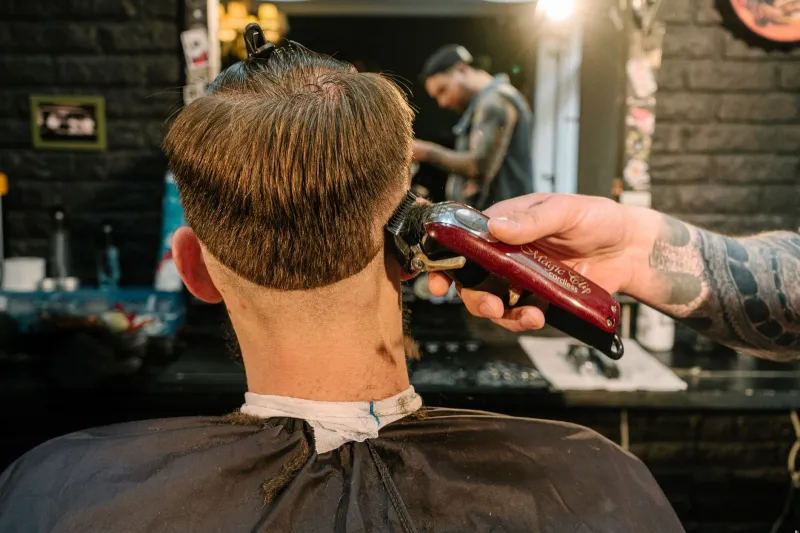
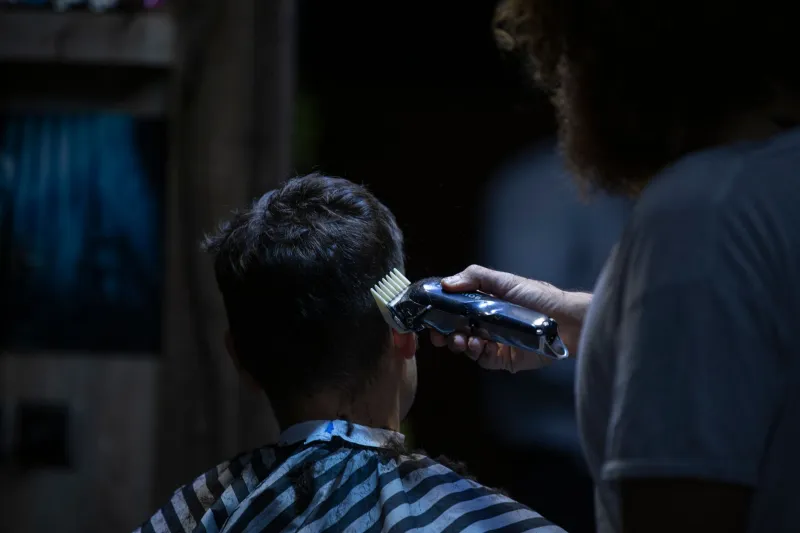
The regional split is not just about taste. It is about the chair. A barber in a busy neighbourhood shop has different constraints from a stylist in a salon that specialises in colour and precision cutting. One is working fast, often with clippers and a mirror queue out the door. The other has more time to texturise, soften and shape. The same brief - 'a mullet, but make it fit me' - produces very different results depending on the postcode, the price point and the client's hair type.
Weather matters too. Britain's damp air, wind and sudden showers are not kind to a cut that needs perfect flat-ironed separation. The versions that last are the ones that work with texture rather than against it. That is why Glasgow's shag-heavy take and Liverpool's sharper front both make sense: they are practical responses to local conditions, even when they look like pure attitude.
There is also a generational ease at work. For plenty of clients in 2026, the mullet has no shock value left. It is just another option on the menu, alongside a crop, a bob or a grown-out fringe. That has allowed the cut to loosen up and become more local. When a haircut stops being a rebellion, it can start being a language.
The most honest haircut?
So is the mullet Britain's most honest haircut in 2026? Maybe not in every postcode. The polite version can still feel like a calculated fashion move. But at its best, the regional mullet is honest in a quieter way: it admits that hair grows, that life is not symmetrical, and that a cut can be shaped by the street it walks down.
The Liverpool version says you can be bold and precise. The Glasgow version says you can be soft and unruly. The London and Manchester versions say you can take a risk without making it a performance. None of them are the definitive mullet. That is exactly why the cut has lasted. It has stopped being a single argument and become a local accent - and Britain is better for it.