Better at Six Weeks: The UK Haircuts Designed to Peak After the Salon
The best haircut in Britain right now might not look its best on the day you get it. That sounds like a line from a salon trying to soften the blow of a fringe that hasn't settled. It isn't. Across UK salons, stylists are designing cuts around what happens at week six, month three and the awkward stretch in between, rather than chasing one perfect day-one reveal.
Call it the grow-out mindset. The shape still has to land in the chair, obviously. But the real test is whether it still feels deliberate when the ends soften, the weight drops and the styling has to survive a bus shelter, a drizzle and a hat. In 2026, that is where the confidence is.
The day-one trap
Salon hair has a lighting problem. Under the mirror lights, a sharp bob, a heavy fringe or a razor-cropped shag can look finished before you've even left. On the pavement, it meets wind, rain and the reality of a 7.40am commute. A cut that only works with a round brush and twenty minutes is not a bad cut, exactly. It is just a cut with a very short shelf life.
The stylists leaning into grow-out design are not anti-polish. They are anti-fragile. They want the first week to look good and the sixth week to look intentional. That means thinking about weight placement before the scissors go in: where the bulk sits, how the perimeter will move, whether the fringe will split into curtains or settle into a solid line once it has a little length.
Weight where it matters
Weight is the quiet machinery of a haircut. A bob with too much weight at the ends can turn into a bell as it grows. A shag with the layering stacked too high can collapse. A crop with no planned softness can move from sharp to shapeless in a fortnight. The fix is not always more product or more appointments. Often it is a different internal shape from the start.
One Manchester stylist describes it as building in 'a second haircut' beneath the first. The top layer does the day-one work. The underneath gives the cut somewhere to go. For curly clients, that might mean keeping length in the right places so the curl pattern has room to breathe as it drops. For straight, heavy hair, it might mean invisible internal layers that stop the shape from turning into a triangle. Either way, the cut is being asked to behave beyond the salon door.
Lines that hold their nerve
Strong lines are not the enemy of grow-out. They are the thing that keeps a cut looking like a decision. A blunt fringe, a clean cheekbone-length line or a squared-off nape can carry a shape for weeks, even as the rest of it softens. The trick is knowing which lines need to stay hard and which need to be broken up.
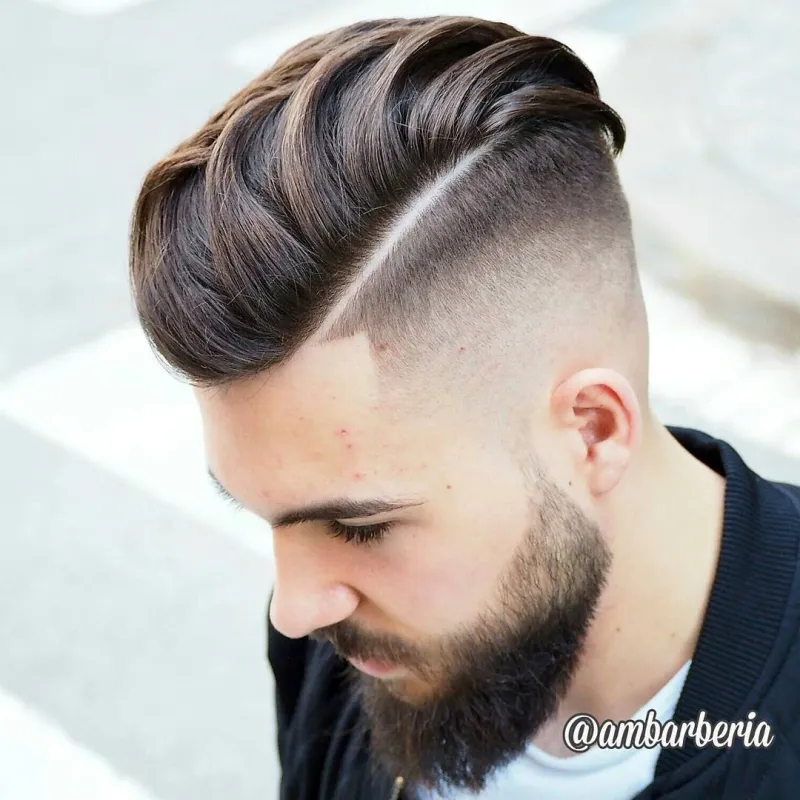
This is where the British street-style influence shows. The cuts that look best after a few weeks tend to have a little tension in them: a soft shag with a solid fringe, a grown-out crop with a sharp sideburn, a bob that is slightly longer at the front so it keeps its direction as it falls. Nothing too neat. Nothing too vague. The grow-out becomes part of the identity rather than an apology.
The maintenance appointment as co-author
The old model was simple: get the cut, then return when it stops working. The new model treats the follow-up as part of the design. That does not mean clients are being pushed into a six-week direct debit. It means the appointment is about protecting the shape, not resetting it.
A good maintenance visit might be a fringe trim, a bit of internal weight removal or a check on how the perimeter is sitting. It can be twenty minutes rather than an hour. The point is to keep the cut's intention alive while letting the length do its thing. For clients, that is a different kind of value: less frequent full restyles, more thoughtful upkeep.
What it looks like on the pavement
The results are showing up in the wild. Grown-out fringes pushed to the side. Bobs that have dropped below the jaw but kept their blunt edge. Shags with a little more weight through the back. Crops that have softened into something closer to a pixie without losing their bite. These are not cuts waiting to be fixed. They are cuts in their second act.
That shift says something about how British hair is being worn right now. The most confident look is not the one that looks freshly done every day. It is the one that looks like it belongs to the person wearing it, even after the salon shine has gone. A cut that gets better as it loses its polish is not a compromise. It is a plan.
The month-three test
So here is a useful question to ask in the chair: what will this look like in three months? Not because the cut has to last forever, but because a good shape should have a life after the blow-dry. If the answer is 'a grown-out version of the same idea', you are probably in the right hands. If the answer is 'we'll deal with it then', maybe not.
Britain's boldest hair in 2026 is not necessarily the most complicated. It is the most considered. The cut that still has a point of view when the ends are a little softer, the fringe is a little longer and the styling is a little less disciplined. That is not a grow-out. That is the haircut doing its job.