Street Facing: Why the Salon Window Is Britain's Boldest Hair Stage
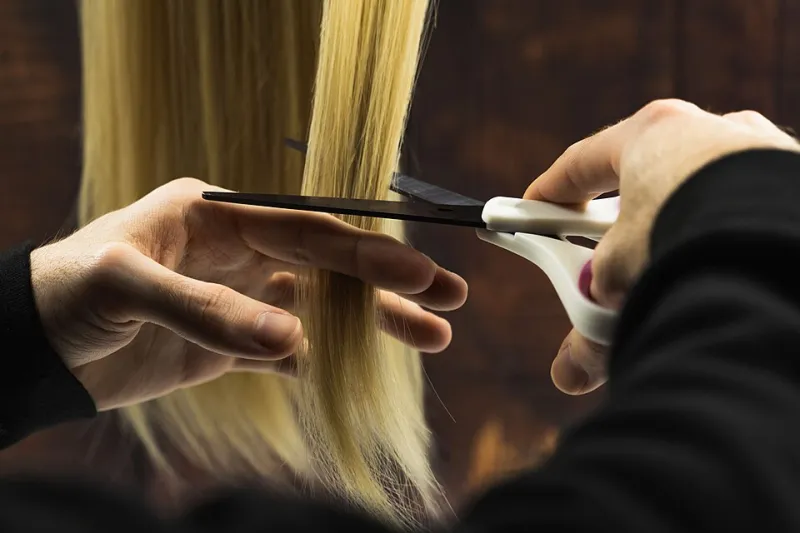
Photo: geehairimages, CC BY 2.0, via Wikimedia Commons
On a wet Saturday morning in Manchester's Northern Quarter, the pavement outside a salon moves slower than the traffic. Someone is halfway through a blunt bob in the window. The cape is black, the clips are neon, and the stylist is working with the calm of someone who knows there are spectators. A couple stop. One takes a photo. Another points at the fringe. By Monday, the salon has two bookings from people who say they saw the cut through the glass.
That scene is becoming familiar across Britain in 2026. Salon windows are no longer just a place for a logo, a price list and a tired fern. They are live lookbooks: street-facing stages where cuts are designed, performed and sold in real time. In London, Manchester and Glasgow, the chair by the window is often the most requested seat in the house. It is also the most revealing.
The pavement is the front row
A salon window used to be a boundary. Inside was the craft; outside was the street. Now the glass is more like a screen, and the street is the front row. Passers-by do not just see a finished look on a poster. They see the process: the sectioning, the tension in the scissors, the moment a fringe is checked against a cheekbone. That is a different kind of advertising. It is slower, messier and far more persuasive than a polished grid post.
For stylists, the shift is practical as well as theatrical. Working in the window means working with an audience, and that changes the rhythm of a cut. There is less slouching, fewer private jokes, more attention to the shape that reads from ten paces away. A stylist who can make a cut look good through glass is thinking about silhouette, movement and contrast. Those are the same things that make a look work on the bus, in a queue or under the flat November light.
A cut built for the glass
Visibility changes the brief. A stylist cutting in the window is not just cutting for the client in the mirror; they are cutting for the version of the cut that survives the journey from chair to pavement. That means cleaner lines, stronger shapes and fewer fussy details that disappear at a distance. A soft shag can look like a blur from the bus stop. A precision bob, a sharp fringe or a high-contrast colour block holds its own.
This is where the window starts to shape trends rather than just display them. Salons learn quickly what makes people stop. In London's Dalston and Peckham, the window is a weekend billboard. A stylist can test a new shape on a willing client and watch the street react in real time. In Manchester's Northern Quarter, the footfall does the same job: the window is a preview, and the pavement is the review. Glasgow's Finnieston and the stretch around Dumbarton Road bring a different energy. The audience is smaller, more habitual, more likely to stop and say what they think. That honesty is useful. A cut that makes a commuter pause in the rain is doing something right.
Bookings, bravado and the audience effect
Clients are starting to ask for the window seat by name. Some want the performance. They bring a friend, they film the reveal, they treat the appointment like a small event. Others want the opposite: a chair at the back, away from the glass, where they can cry over a fringe in peace. The best salons are learning to offer both. Visibility only works if it is optional.
That is the tension at the heart of the window trend. A salon is a shopfront, but it is also a private service. The window can drive bookings because it makes the craft look real and immediate. It can also put pressure on clients who did not sign up to be part of the display. The smarter salons are drawing a line. They use the window for show pieces, colour transformations and stylist training. They keep the back chairs for clients who want the cut without the crowd.
Is the window the new runway?
Not quite. A runway is a controlled spectacle; a salon window is a working shopfront. But the comparison is useful. Both rely on silhouette, movement and the split-second read. Both turn a hairdresser into a tastemaker. In 2026, the difference is that the audience does not need a ticket. They just need to walk past.
That is why the window feels more democratic than the runway. It is not curated by a PR team or lit for a front row. It is lit by the grey British sky and watched by people on their way to the shop. It can be glamorous, but it is never sealed off. A teenager on the top deck of a bus can see the same cut as a client sitting in the chair. That kind of exposure does more for bold hair than a thousand polished captions.
When the glass should stay frosted
There is a limit. Not every client wants to be part of the display, and not every cut should be staged. A salon window that turns every appointment into a performance can feel less like a lookbook and more like a zoo. The smarter approach is selective: use the window for the cuts that benefit from an audience, then give private clients the back of the room. The window sells the craft. The back chair protects the client.
The real shift is not that salons have discovered glass. It is that they have realised the street is already watching. In a year when British hair is louder, sharper and more street-facing than it has been for a while, the window is the most honest shopfront a salon has. It says: this is what we do, this is how we move, this is who we are. If you want a cut with an audience, book the window seat. If you want a cut without one, ask for the back. Either way, the pavement is part of the conversation now.