Damp by Design: Why Britain's Sharpest Cuts Are Built to Air-Dry

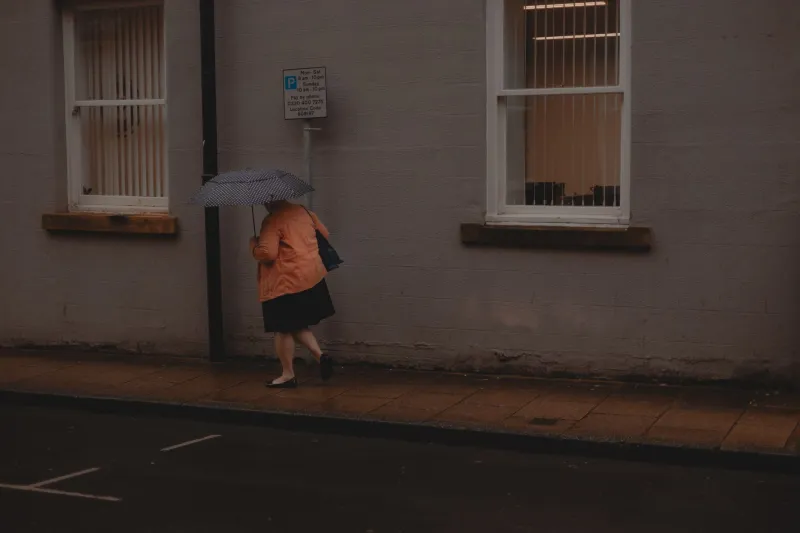
Photo by Photo by Brad Starkey on Unsplash on Unsplash
There's a moment on a wet Tuesday in November, somewhere between the salon door and the bus shelter, when a good blow-dry quietly dies. The bend drops out. The ends go floppy. The fringe that was snapped into place with a round brush at 5.40pm is doing something else entirely by 6.05pm. Anyone who has paid for a finish and then met the reality of a British pavement knows the feeling.
Which is why a growing number of UK stylists have stopped treating the blow-dry as the whole point of the appointment. The cut, they argue, should be the finish. Not the thing you buy and then spend forty minutes a day recreating with heat and hope.
The blow-dry was never really ours
The bouncy, glossy, freshly-brushed blow-dry is a beautiful object. It also belongs to a world of studio lighting, camera-ready timing and weather that behaves itself. Britain in November is not that world. We have mizzle. We have wind that arrives sideways off a car park. We have the 8.12 to Leeds and a hood that goes up the second you leave the house.
So the default has flipped. Instead of cutting a shape and forcing it into a finish with heat, stylists are cutting so that the natural dry is the finish. Salons call it different things, air-dry cut, dry-cut shape, lived-in layering, but the idea is consistent: work out how the hair falls when left alone, then edit around that.
What cutting for air-dry actually involves
It is not a lazy cut. If anything it's more precise, because there's nowhere to hide once the hairdryer is off.
Perimeter first. A blunt or softly blunt baseline gives an air-dried shape a line to hold. Wispy, over-thinned ends are the enemy here, because they collapse into frizz the moment they meet damp air. Keeping weight in the ends means the shape still reads as a shape after a walk.
Then the inside. Internal layering and invisible layers take out bulk where it matters, behind the ear, under the crown, through the sides, without chopping up the surface. The top layer stays long and clean while the underneath does the moving. Face-framing gets cut slightly shorter and pointed forward, so it settles instead of splaying.
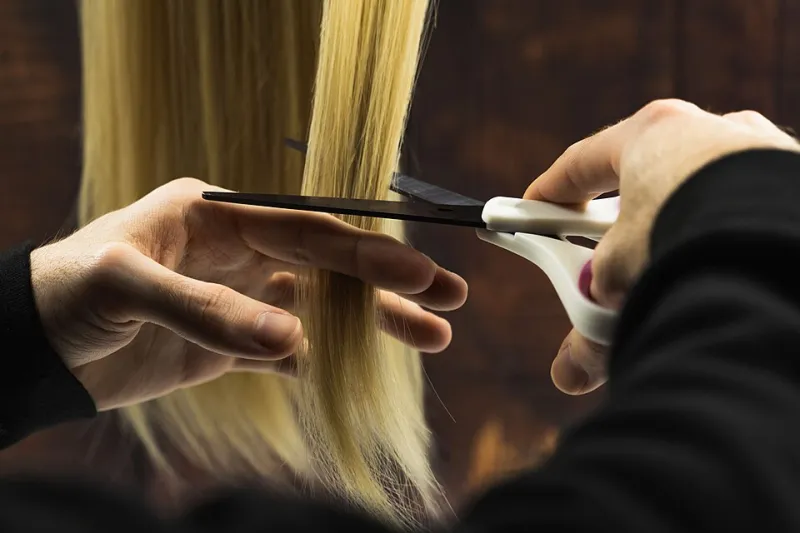
Point-cutting and slide-cutting soften the ends without thinning them out. A stylist cutting for air-dry will usually check the shape dry, on the natural fall, and often again after a rough scrunch. If they only show you the finished blow-dry, ask to see it wet. That's the version you're actually buying.
Texture is the whole argument
Curly and wavy clients have known this for years. The curly cut movement made the case long before straight-haired clients caught on: cut the hair in its natural state, style it in its natural state, stop apologising for both.
What's changed is that the argument has spread. Straight-haired clients are asking for shapes that survive the walk home. Wavy clients want the option to diffuse or not. The tools have followed, with microfibre towels, curl creams, salt sprays and lightweight mousses moving from the niche shelf to the main one.
The product rule I keep hearing from stylists is one product, applied wet, then hands off. A cream leave-in for weight and softness. A salt or texture spray for grip, used sparingly, mostly mid-length to ends. A light mousse scrunched through for hold without crunch. Anything heavier and you're back to fighting the weather with product instead of working with it.
The radiator test
Every air-dry cut gets tested somewhere in the first week. Usually it's an office radiator, a car heater on the way home, or a hairband that leaves a dent at three o'clock. Good shapes handle all three.
The radiator is the interesting one. Hair cut with too much internal weight will go flat on the side facing the heat and stay puffy on the other. Hair layered properly will lift back into shape when you move. Blunt ends help here too, because they hold their line even after being tucked behind an ear for two hours.
The hairband is the other tell. If your cut needs a full restyle after a ponytail, it isn't really an air-dry cut. It's a style that requires maintenance, which is fine, but it should be sold as one.
The maths of the two-hour dry
There's a time argument as well. A wash-and-go shape hands back forty minutes a day to the person who used to blow-dry it. Over a winter that's a small fortune in electricity and a bigger one in patience. Salons have noticed. Some now offer a dry-cut price. Some build an air-dry lesson into the appointment. Some simply spend the last ten minutes teaching the scrunch instead of reaching for the brush.
That last bit matters more than any product. A cut that comes with instructions for how to leave it alone is worth more than one that comes with instructions for how to fight it.
What to say in the chair
Skip 'just a trim'. That's a request for maintenance, not a shape, and it keeps you on the blow-dry treadmill. Instead, describe the conditions. 'I walk twenty minutes to the station.' 'My hair dries frizzy at the front and flat at the back.' 'I want to wash it, put one thing in it and leave.'
Ask for a dry check. Ask what happens if you don't use a brush. Ask for the shape to be cut for the fall, not for the finish. A good stylist will like the question. A great one will have already done it before you asked.
The finish isn't going anywhere
None of this means the salon blow-dry is finished. It's still there for weddings, for big nights, for the days you want the full thing. What's shifting is the default. The blow-dry is becoming an upgrade rather than the entry ticket. The cut has to stand on its own two feet, in real air, on real pavements, in a country that cannot be relied on to stay dry for the length of a bus journey.
That isn't a compromise. It's a better brief. This is street-level hair design: what happens after you leave the chair matters more than what happens in it. Bold hair should survive the walk home.