The Hidden Line: Why UK Bobs Are Getting a Secret Second Identity
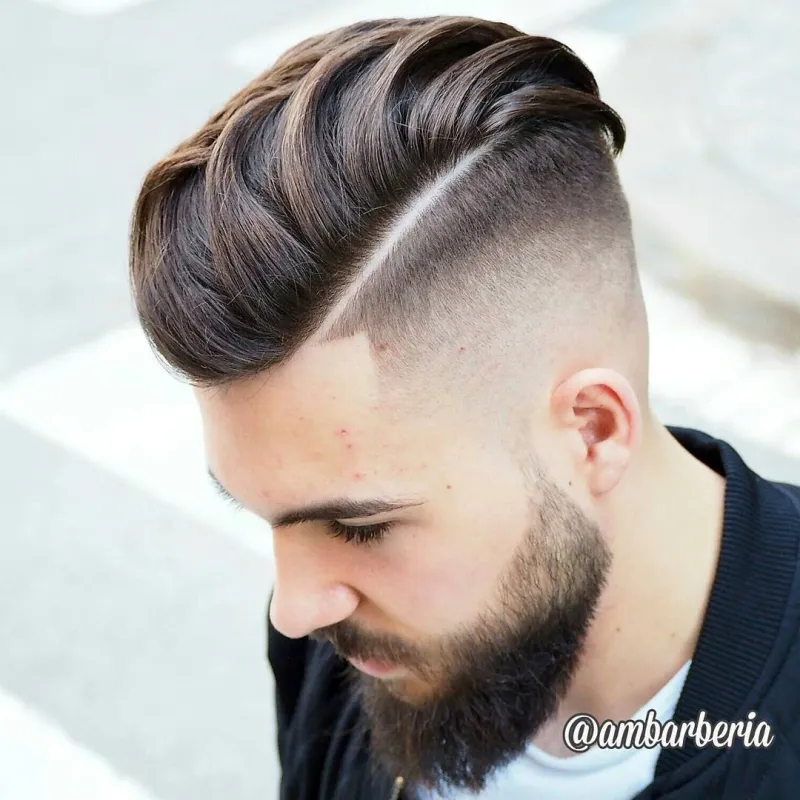
Photo: undercut bob hairstyle back of head salon close up, via cdn.shopify.com
There’s a particular kind of London bob doing the rounds right now. From the front, it’s all clean lines and grown-up weight — the sort of haircut that gets nodded through by a office manager and photographed outside a Dalston pub in the same evening. Turn your head, though, and the story changes. Lift the back section, part it a little higher, tuck it behind an ear, and there it is: a shaved line, a stark disconnection, a stripe of colour that has no business being there. This is the concealed undercut, and it’s quietly becoming one of the sharpest moves in UK salons for winter 2026.
The cut you don’t see coming
The appeal isn’t a full dramatic undercut. That’s been done, and it asks a lot of the wearer — commitment, clippers, a certain tolerance for cold ears. What’s happening now is more subtle. Stylists are carving hidden sections beneath the main body of a bob or lob, leaving the top layers intact so the cut reads conventional until you choose to reveal it. Sometimes it’s a clean shaved band. Sometimes it’s a geometric line, a curve or a stepped shape. Sometimes it’s simply a shorter internal layer that lets the bob collapse into something more chaotic when you want it to.
The technique sounds simple. It isn’t. A good concealed undercut has to be planned around how the hair falls, how the client wears it, and where the line will sit when the hair is down. Cut too high, and you’ve got a visible gap. Cut too low, and nobody ever sees it. The sweet spot is a line that disappears under the weight of the bob but appears the second you lift, pin or tuck. UK stylists are getting very good at that sweet spot.
Why the bob is the perfect cover
A bob is a brilliant liar. It has weight, a blunt edge and enough volume at the back to hide a whole second haircut underneath. That’s why the trend has landed so hard here. Britain’s street style has always been good at this kind of double life — polished on the surface, a bit feral underneath. The concealed undercut fits that mood exactly. It’s not a shout. It’s a raised eyebrow.
It also suits the British winter. Hats go on, collars go up, hair gets tucked behind ears and pinned back against the wind. A hidden line gives those everyday movements a payoff. You’re not walking around with a statement shaved patch on show in the rain. You’re carrying a private detail that only appears when you decide it should.
Colour under cover
The same logic is driving concealed colour panels. Instead of a full head of brights or a heavy money piece, clients are asking for a slice of colour tucked beneath the top layers — an inky stripe, a shock of red, a chrome flash, a patch of acid green that only shows when the hair moves. In a bob, that can be a single panel at the nape or a thin band running along the internal line. In a lob, it can sit just behind the ear, hidden until a tuck.
This is where UK salons are having fun. The colour doesn’t have to be practical. It doesn’t have to be blended for root drag or lived-in wear. It can be graphic, precise and a bit strange, because it’s not carrying the whole look. It’s a secret. That changes the brief. Clients are more willing to try a hard colour when it’s tucked away, and stylists are more willing to push it.
Who it actually suits
Honestly? More people than you’d think, but not everyone. Fine hair can work beautifully with a concealed undercut because removing internal weight can give the bob more lift and movement. Thick hair can also work, but the stylist needs to be careful not to create a shelf. The best candidates are people who wear their hair both up and down, who like a bit of versatility, and who aren’t precious about a visible line when the hair is tied back.
It’s less successful on very short bobs, crops or anyone who wants a single, low-maintenance shape. If you know you’ll never tuck, pin or lift the hair, the hidden line is just a secret you’re keeping from yourself. Be honest in the chair. A good stylist will tell you whether the cut will actually reveal itself in real life, not just in the salon mirror.
The maintenance conversation
This is the bit that gets glossed over on social media. A concealed undercut is not a one-and-done appointment. The shaved section grows out fast — often within four to six weeks — and the line loses its crispness. Colour panels need refreshing, especially if you’ve gone for a high-contrast shade. And the blend between the hidden section and the rest of the bob needs regular checking, or the whole thing starts to look accidental rather than intentional.
That doesn’t mean it’s high-maintenance in the same way as a full bleach and tone. It means you need a plan. Book the follow-up before you leave. Ask what the line will look like at week six. Ask how the colour will fade. Ask whether you can maintain the shape at home with clippers or whether you need to come back in. UK salons are getting better at having that conversation upfront, because the last thing anyone wants is a client discovering a surprise mullet-level regrowth situation in the mirror.
The after-dark reveal
The styling is where the concealed undercut earns its keep. Wear the bob smooth and tucked for work, then lift the back section, rough it up with texture spray and pin the top half away for the evening. The line appears. The colour flashes. The cut changes character without a full restyle. It’s the same logic as a good jacket with a wild lining — nobody knows until you move.
For winter 2026, that feels right. Britain’s boldest hair isn’t always the loudest hair. Sometimes it’s the cut that keeps its mouth shut until the right moment. The bob is still the bob. It’s just got a second identity now, and it’s waiting under the surface.