The Cans Protocol: UK Haircuts Are Being Rebuilt Around Over-Ear Headphones

Photo: Jwslubbock, CC BY-SA 4.0, via Wikimedia Commons
There is a new silhouette on the UK high street, and it is not a fringe or a fade. It is the flattened crown, the dented side panel and the temple that has been carefully cleared so a pair of over-ear headphones can sit flush against the skull. Walk through any city centre at 8.40am and you will see it: commuters with ANC cans clamped on, hair compressed into shapes that were never discussed in the chair but are now part of the daily brief.
The Dent Is the Brief
Barbers and salon stylists across the UK are noticing the same thing. Clients are not just asking for a cut that looks good when it is freshly styled. They are asking for a cut that survives the commute, the office, the gym and the walk home with a pair of headphones on their head for most of it.
“People used to talk about hat hair,” says a barber at a backstreet shop in Manchester. “Now it is can hair. The headphone band sits in the same place every day, so the hair learns to lie there. If I cut the top too long and too soft, it just folds into a dent by lunchtime.”
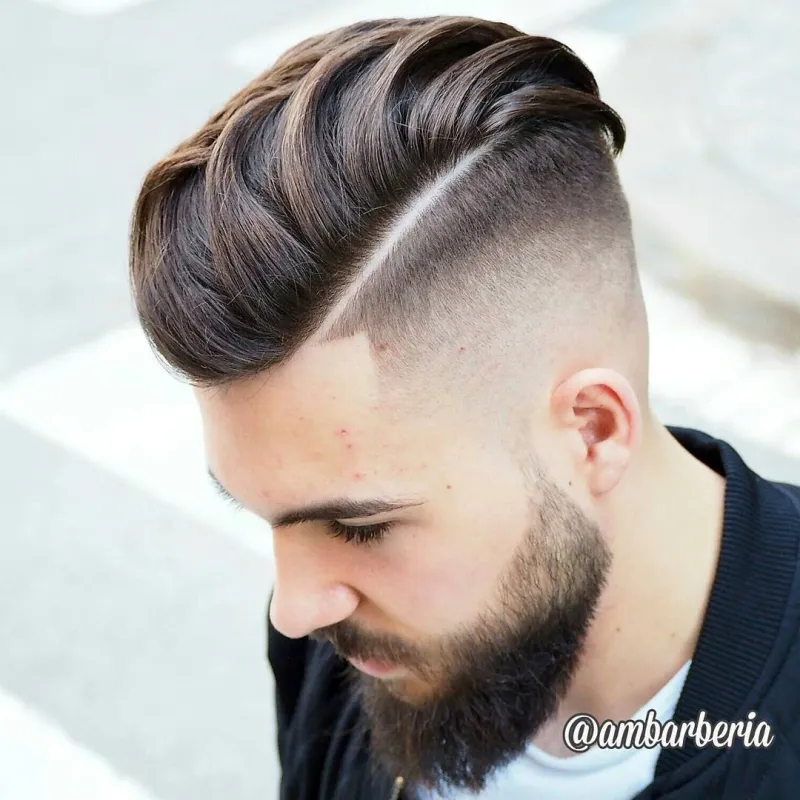
The result is a shift in how some UK cuts are being built. Crown sections are being left with more internal structure, not necessarily more length. Side panels are being shaped so they do not collapse under the ear cups. Temple areas are being kept cleaner, partly because hair trapped under a headphone cushion quickly becomes a fuzz of flyaways and pressure marks. The cut has to look intentional when the cans come off, but it also has to behave while they are on.
Temple Clearance and the Commute
The temple is the new pressure point. Over-ear headphones sit directly over the area where hair is finest and most likely to kink. Stylists are responding with softer, tighter outlines around the temple that allow the headphone cushion to sit cleanly without grabbing at stray hairs. In some cases, that means a slightly more exposed temple than a client might have asked for a few years ago. In others, it means leaving a little more weight just behind the hairline so the hair can be pushed forward again after the cans come off.
On the Tube, the Northern line at 8am is basically a laboratory for this. You can spot the people who have been wearing over-ear headphones since they left the house: a neat band-shaped flattening across the crown, a slight lift at the sides where the cups have pushed the hair outwards, and a temple that has given up trying to sit flat. The smartest cuts are the ones that make this look deliberate — a graphic line, a bit of texture, a shape that reads as street style rather than bedhead.
What Barbers Are Actually Cutting
There is no single headphone haircut, but there are patterns. Short, textured crops with a bit of length on top are popular because they can be re-fluffed with fingers in the office toilet mirror. Mid-length cuts are being layered more aggressively around the crown so the hair does not sit as one flat sheet under the band. And the humble side part is getting a rethink: instead of a clean, flat sweep, stylists are adding a soft disconnection so the hair can fall back into place after being pressed under a cup.
“I ask clients where their headphones sit,” says a stylist in Bristol. “If they wear them all day, I cut for that. There is no point giving someone a soft, fluffy top that is going to be flattened by 10am. We build in a bit of grit, a bit of hold, and we leave enough shape that they can reset it with their hands.”
Recovery Mode: Products That Fight the Flattening
The right products are doing as much work as the cut. A lightweight texture spray at the roots gives hair something to spring back against after hours of pressure. Sea salt mist is useful for shorter cuts that need grip without weight, while a flexible mousse can help mid-length hair hold its shape without turning crisp under a headphone band. Dry shampoo is the emergency tool: a quick blast at the crown and a scrub with fingertips can lift a flattened section in seconds.
For longer hair, stylists are recommending a light oil or serum on the mid-lengths and ends, not the roots, so the hair can be shaken out rather than combed flat. The goal is not perfect salon volume at 6pm. It is hair that looks like it has a bit of life left in it after a day under cans.
The New Street Silhouette
The headphone gap is not a problem to be solved. It is a new shape on the street. UK hair has always been shaped by the weather, the commute and the accessories people actually wear. Over-ear headphones are just the latest thing pressing into the cut. The best salons are treating them as part of the brief — not an afterthought — and the result is a sharper, more practical kind of street style. Cans on, hair holds. Cans off, hair moves. That is the protocol.